Short Answer
Tie wire toeboards cause cut and puncture injuries from sharp ends, snag on clothing and tools, loosen over time from vibration and load, create debris hazards during teardown, and are installed inconsistently across a single job. These gaps are the reason OSHA cites toeboard violations so frequently.
Tie wire toeboards are still the standard on many scaffolds, but the method trades speed for six hazards that show up every day on jobsites. Under 29 CFR 1926.451(h)(4), a toeboard must withstand 50 pounds of force in any downward or horizontal direction, be at least 3 and one-half inches high, sit no more than one-quarter inch above the platform, and be securely fastened at the outermost edge. Tie wire struggles with all four.
Sharp Ends and Hand Injuries
Number 9 tie wire comes in coils. Workers unwrap a length, wrap it around the toeboard and the scaffold tube, twist it tight with their hands or pliers, and cut the excess. That cut end stays sharp. Over the course of a scaffold assembly and then a teardown, crews handle these boards many times, and sharp wire ends cut hands, wrists and forearms.
The injury is predictable: a shallow puncture or a deep laceration. In a high-traffic area like a refinery turnaround where teams are moving fast, even a hand injury that does not need stitches pulls a worker off the job for an incident report, medical attention and lost time. A wire end that catches a palm during a fast hand movement can go deep.
Workers on industrial sites wear gloves, but they also roll them up or remove them for fine work (tightening a clamp, setting up fall protection, reading a measurement). That is when tie wire cuts happen. There is no OSHA standard for the cutting hazard itself (it is a general-duty clause issue), but it is so common that HSE teams at major owners (refineries, power plants, shipbuilding) have noticed it. The sharper and more corroded the wire, the worse the cut.
Snag Points and Entanglement
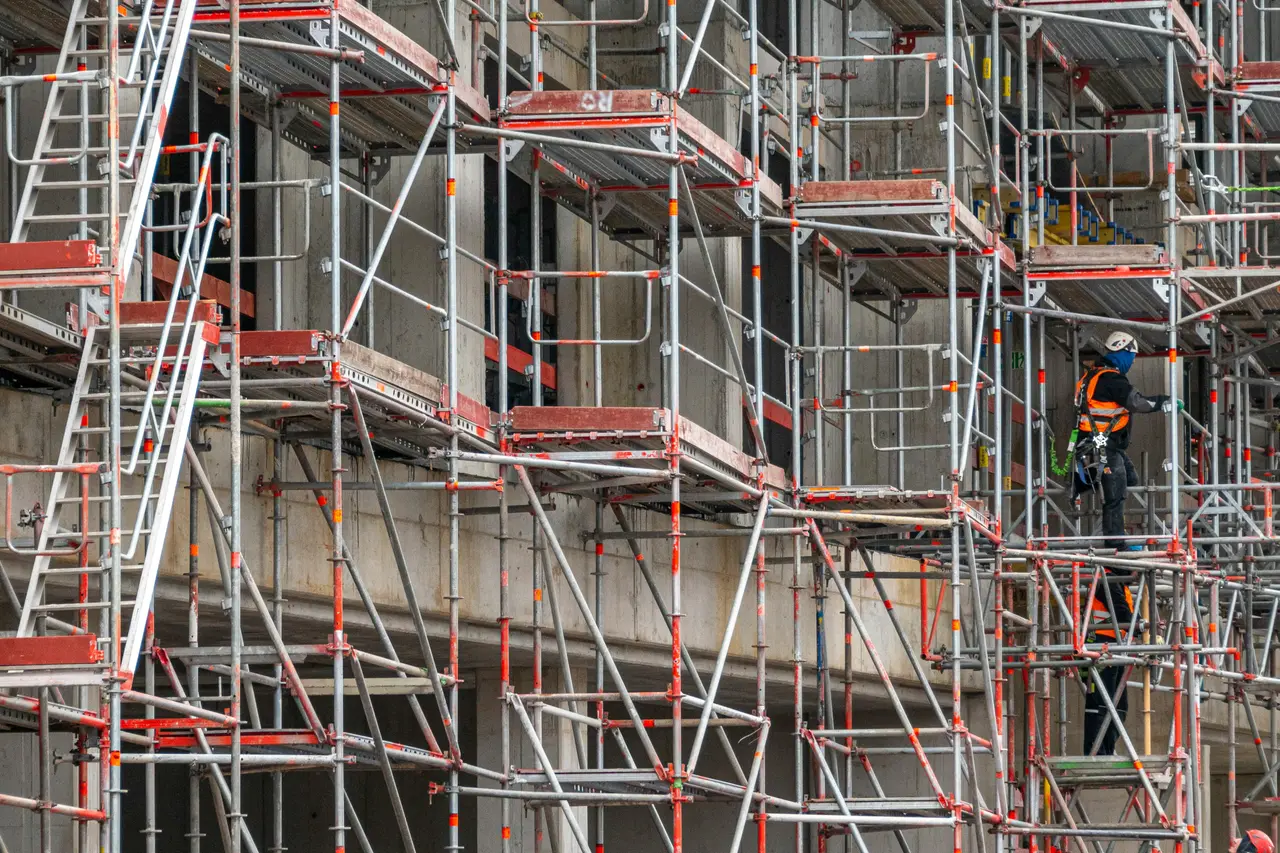
Tie wire wraps in loops and knots. A worker’s tool belt, a hard hat strap, a safety lanyard, or work clothing gets snagged on a loop of wire. In a hurried environment, a snag can happen fast enough to twist the worker off balance or toward the edge. On a scaffold more than 10 feet above the ground, that is a real hazard.
The risk is highest during installation and removal. A crew is tying down a toeboard in a corner; a second crew member is threading the fall-protection cable above. The cable loop catches the toeboard tie wire. In the confusion of a busy installation, a moment of entanglement is enough to create a near-miss or, on a bad day, a fall.
Loose or coiled wire also snags on equipment being moved across the platform: a pneumatic drill, a bucket of parts, a length of pipe. Every snag stops work, and it only takes one snag that catches during a lift to create a problem.
Loosening Over Time
Once wrapped and twisted tight, tie wire does not stay tight. Vibration from adjacent work, from crane movement, from the weight of workers standing on the platform, and from weather all cause wire to stretch and slip. Wire is also soft; constant vibration work-hardens it until it becomes brittle, and the grip weakens.
A crew ties a toeboard at the start of a shift. By the end of the shift, if no one has checked it, the wire has stretched maybe one-quarter or one-half inch. The board is still there, but the hold is weaker. By the next day, it has stretched again. By the end of the week, the toeboard is loose enough that a 50-pound downward or horizontal force could slide the board or break the wire.
OSHA inspectors test exactly this: they hang a 50-pound weight from the toeboard or apply 50 pounds of force horizontally. A loose tie-wire assembly fails. Workers do not know it is loose until the test, or until someone leans on it wrong.
Debris During Teardown
As a turnaround or maintenance job comes to an end, the scaffold comes down in reverse. Tie wire toeboards are stripped. By this point, weeks of vibration and corrosion have degraded the wire. Some knots are corroded or slipped. Boards are hard to remove because the wire has rusted or twisted.
As crews pull a board, loose wire wraps and cut ends fall. A worker 30 feet below gets hit by a falling piece of corroded wire. It does not need to be heavy; even a light wire with a sharp end can cause a puncture injury. The debris hazard during teardown is one of the largest gaps in the tie-wire method, and it is directly cited in OSHA inspection reports.
A toeboard that has partially come loose is no longer a toeboard; it has become falling debris itself. The hazard it was supposed to prevent has reversed.
Inconsistent Fastening Across the Job
A large scaffold might have 100 or 200 bays. Each bay gets two toeboards at the platform edge. That is 200 or 400 toeboard installations on one job. A crew of five might be doing the tying. By the time the crew has tied 50 toeboards, fatigue, habit, and speed create variation.
Worker A ties a board snug. Worker B ties the next one tight enough that it is hard to move. Worker C wraps it quickly and moves on. Across the 400 boards on the job, the fastening quality is all over the map. Some boards are over-tight and difficult to adjust at corners; others are loose. When an OSHA inspector or an owner’s safety team samples and tests, they find boards that fail the 50-pound force test and others that are too high or too low.
The variation also makes maintenance harder. A rigger coming back to adjust a board at day three of the job does not know if it was tied tight on purpose or left loose. Some boards need to be re-tied.
The Fastening Requirement Under OSHA
OSHA does not say “no tie wire.” But the standard says the toeboard shall be “securely fastened in place at the outermost edge of the platform.” The word “securely” is the test. When a tie-wire toeboard is tied once and never checked again, or when it is tied by workers at different tightness levels, it is not securely fastened. The OSHA inspector’s 50-pound test proves it.
The term “fastened” also implies a permanent or semi-permanent state. Wire stretches. A fastening method that loosens over time is not a fastening; it is a temporary clamp. That is why mechanical fasteners, brackets, and clamps have an edge: they can be designed to resist loosening, and they can be installed the same way every time.
A Checklist for Tie-Wire Toeboard Inspections
If your site still uses tie wire, inspection before each shift and after any occurrence that could affect its integrity is not optional. It is required under 29 CFR 1926.451(f)(3) to keep pace with stretching and loosening.
| Check | Method | If Failed |
|---|---|---|
| Tightness | Hand pressure; wire should not shift more than 1/8 inch | Re-tie or add a second wrap |
| Corrosion | Visual; look for rust, green patina, or brittleness | Mark for replacement |
| Sharp ends | Feel along the cut end with a glove; should be smooth or rounded | Tape, file or replace |
| Height | Measure from platform to top of board; should be at least 3 and 1/2 inches | Remove and re-tie higher |
| Clearance | Use a gap gauge or card stock; should be no more than 1/4 inch above the platform | Adjust board down |
| Knots and wraps | Check for loose knots, slipped wire, or corroded connections | Re-tie or replace |
Run this check before each shift and after any occurrence that could affect the toeboard’s integrity, per 29 CFR 1926.451(f)(3), such as weather, nearby work, or a work stoppage.
Moving Past Tie Wire
Tie wire will likely remain on some scaffolds for years. It is cheap, and crews know how to use it. But the hazard record is clear: hand injuries, snag points, loosening, debris, and inconsistent fastening are baked into the method.
Mechanical alternatives exist that address these gaps. A properly designed bracket eliminates the sharp-end hazard, eliminates snag points, can be installed the same way every time, and stays tight without daily maintenance. When the product is designed to the toeboard standard and tested against the 50-pound force requirement, it works.
Your safety and purchasing teams own the decision to move past tie wire. The cost of a hand injury, a near-miss investigation, or a scaffold failure during teardown is orders of magnitude higher than the cost of a faster, more consistent fastening method. The OSHA standard exists because people were injured or killed by falling objects from toeboards. Tie wire was never the answer; it was just the quickest tool available.
For what a competent person checks at each inspection, see what a competent person checks on toeboards. If you are looking to solve these hazards, a site-specific submittal package and a short pilot can show your safety and purchasing teams whether an alternative works on your scaffold system and your jobsite. Get a quote to explore options with your team.
Frequently Asked Questions
Does Tie Wire Meet OSHA Toeboard Requirements?
Only if installed correctly and kept tight throughout the job. Tie wire itself is not prohibited, but 29 CFR 1926.451(h)(4) requires the toeboard assembly to withstand 50 pounds of force and be securely fastened at the platform edge. Most field tie-wire installations loosen or break under that standard.
What Kind of Injuries Does Tie Wire Cause?
The sharp cut ends of wire cause puncture and laceration injuries to hands, wrists and forearms when workers install, adjust or remove toeboards. Wire wrapped around boards can snag on clothing, tool belts, and equipment, creating entanglement hazards. Handling damaged or knotted wire during teardown increases injury risk.
Why Do Tie Wire Toeboards Loosen?
Wire stretches and softens under vibration and load over the life of the scaffold. Workers tie boards quickly with hand tools, creating inconsistent wrapping tension. Once loose, the toeboard loses the ability to contain falling hand tools or small objects, the whole point of the standard.
What Creates the Debris Hazard When Tie Wire Comes Down?
As wire corrodes and tightening knots slip, boards drop or shift. Loose wire wraps, knotted ends, and fragments of corroded wire become debris that falls onto workers and equipment below. A toeboard that has come partially loose has failed the standard and become a falling-object hazard itself.
How Does Inconsistent Fastening Create a Hazard?
A job might have 100 bays with 200 toeboards, tied by crews with different skill and hurry levels. Some boards are over-tight and difficult to adjust; others are barely secure. This variation means some toeboard assemblies fail the force test and others are installed too loose or high to meet the height and clearance rules.